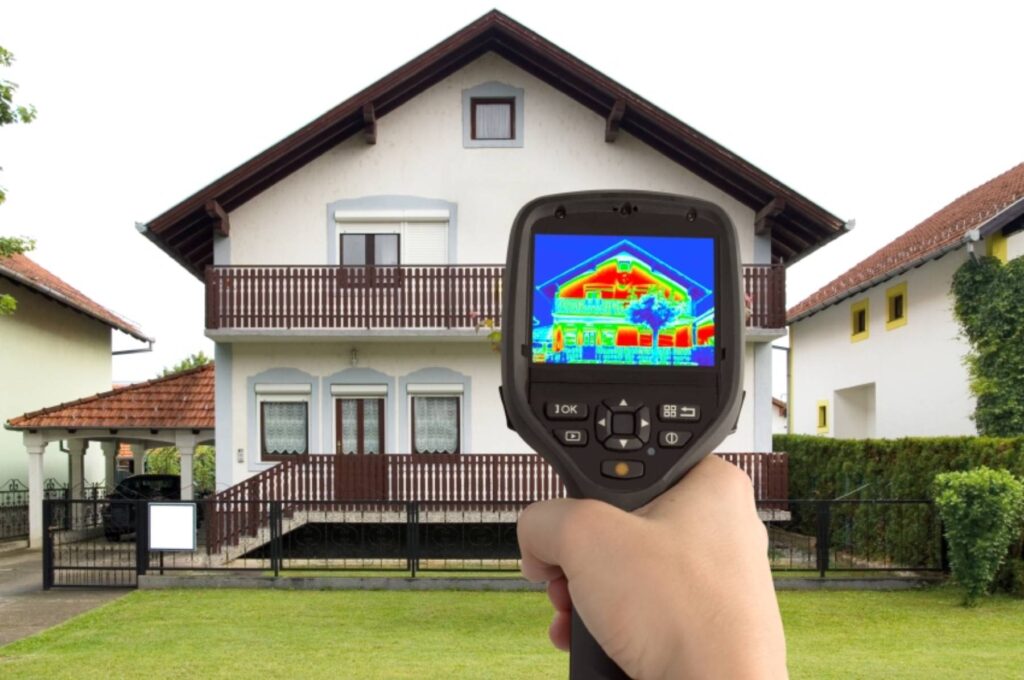
A thermal imaging inspection gives buyers and homeowners in Simcoe County a look at problems that would otherwise stay hidden behind drywall and insulation. Insight Inspection Services uses infrared technology alongside a standard home inspection to flag moisture intrusion, insulation gaps, electrical hotspots, and HVAC performance issues before they turn into expensive repairs. For anyone purchasing a home in Barrie, Angus, Wasaga Beach, Collingwood, or Muskoka, this added layer of detail can mean the difference between a confident closing and an unwelcome surprise a few months in.
How a Thermal Imaging Inspection Works
An infrared camera reads surface temperature differences across walls, ceilings, and floors. Cooler or warmer patches often point to conditions a visual inspection alone cannot catch, such as water intrusion behind a wall, a missing section of attic insulation, or a wire connection running hotter than it should. During the scan, the inspector checks exterior walls, window and door frames, ceilings below the attic, and areas around plumbing fixtures, then cross references any anomalies against moisture readings and a physical inspection of accessible areas. The result is a report that shows exactly where a concern was found, not just that one might exist somewhere in the home.
What a Thermal Scan Can Reveal
Homes throughout Simcoe County and York Region deal with real seasonal swings, from humid summers to cold winters that stress insulation and building envelopes. This kind of scan is particularly useful for catching moisture that has worked its way into a wall cavity after a roof or plumbing leak, since that moisture often shows up as a distinct temperature signature long before staining or odour appears. It can also identify gaps in attic or wall insulation that a previous owner patched over, cold air infiltration around older windows and doors, and electrical panels or outlets that are running warmer than surrounding components. Buyers touring a resale home in Collingwood or a cottage property near Muskoka benefit especially from this added layer of detail, since older construction methods and additions are more likely to hide inconsistencies.
Thermal Imaging Inspection Limitations Buyers Should Understand
No infrared scan replaces a full physical evaluation of a home. Cameras read surface temperature, not what is happening several inches into a wall assembly, so results are always interpreted alongside moisture meters and a hands-on inspection of accessible areas. Weather conditions, recent heating or cooling cycles, and even direct sunlight on a wall can influence a reading, which is why a Certified Master Inspector accounts for these variables before drawing conclusions. Buyers should think of a thermal imaging inspection as one more diagnostic tool layered onto a thorough home inspection, not a standalone service that tells the whole story on its own.
Building Science Behind the Scan
The value of this diagnostic tool comes down to building science fundamentals: how air, heat, and moisture move through a structure. Natural Resources Canada’s own guidance notes that most houses benefit from air leakage control, moisture control, and ventilation improvements to reduce the risk of condensation problems, which is exactly the kind of issue a thermal imaging inspection is built to surface early. Understanding where a home is losing conditioned air or trapping moisture helps buyers negotiate repairs before closing and helps existing homeowners plan maintenance before small issues become structural ones.
Who Should Request a Thermal Imaging Inspection
Buyers purchasing an older home, a property with a finished basement, or a house with a history of roof or plumbing repairs get the most value from adding a thermal imaging inspection to their standard inspection. Homeowners preparing to sell can also use one to catch and address issues before they show up on a buyer’s report. Insight Inspection Services offers thermal imaging as part of its residential and condo inspection packages throughout Barrie, Simcoe County, and the broader York Region and GTA area, giving buyers a clearer picture of a property’s true condition.
Frequently Asked Questions
Does a thermal imaging inspection cost extra? Thermal imaging is available as an add on to a standard home or condo inspection, with pricing depending on the size and layout of the property. Contact Insight Inspection Services directly for a quote specific to your home.
Can this scan detect mold? Infrared cameras cannot see mold directly, but the scan can identify the moisture conditions that allow mold to grow, which helps prioritize where further testing may be worthwhile.
Is this add on useful on newer homes? Yes. Even new construction can have installation errors in insulation or air sealing, and a scan can catch these issues while they are still easy and inexpensive to correct.
How long does the scan add to the appointment? Most scans add a modest amount of time to a standard inspection appointment, since the inspector is checking areas already being accessed during the visual inspection.
You’re not just buying an inspection. You’re buying peace of mind. Schedule your inspection today and add thermal imaging to get a fuller picture of your next home.
Insight Inspection Services proudly provides home inspections, thermal imaging, mold testing, and more throughout Simcoe County, Barrie, Angus, Wasaga Beach, Collingwood, Muskoka, York Region, GTA, Georgina, Toronto, and Central and Southern Ontario.